
If you've ever felt like social media and your phone are pulling your focus away from what matters, you're not alone — and it's not really your fault.
Here are 4 reasons why this happens — and why balance is harder than it should be.
How do our brains focus?
To understand the underpinnings of what is going wrong, we need a simple understanding of our consciousness. Fundamentally, our brains are constantly dealing with information from our senses. Information enters consciousness either because we intend to focus on it, or as a result of attentional habits based on biological or social instructions.
When our attention is directed towards things based on habit, by definition, the information in question is not something we actively want to focus on. Although habits can be incredibly useful, this is one massive way we often come unstuck.
The brain has a theoretical limit on the amount of data that it can process, which means the information we allow into consciousness becomes extremely important as it determines the content and quality of life. What we focus on shapes our daily experience and how we feel.
The 4 big causes of lack of focus and concentration
1. Our brains didn't evolve to focus on knowledge work
The vast majority of the time humans have been on Earth our priorities have been very simple — getting food and shelter. Only very recently in comparison, we have undergone a major shift in our priorities towards making money, looking after our families and making many complex decisions.
We are faced with an ever-changing array of problems to solve, which are ideally solved with deliberate focus for flexible problem solving. The trouble is our learned attentional habits are still triggered frequently in a world where we have completely different goals from our hunter-gatherer ancestors.
2. We're dealing with more information than ever before
Technology has enabled an information age that has brought a level of hyper-connectivity that has never been seen before. It is well out of the scope of what evolution has prepared us for and as such has put our capacity to focus under more stress than ever.
When we switch between tasks, part of our attention often remains stuck thinking about the original task — this is called attention residue. This is especially true with social media: you close the app but keep thinking about what you saw, or you open it 'just for a second' between tasks and suddenly you're in a semi-distracted state for the rest of your work.
3. Our environment is engineered to distract us
It has always been possible for individuals to hack others' short-term attention, beliefs and feelings by manipulating the very instincts and biases we have been talking about. However, it has never been possible to do so at such scale and with such precision as in the last 15 years.
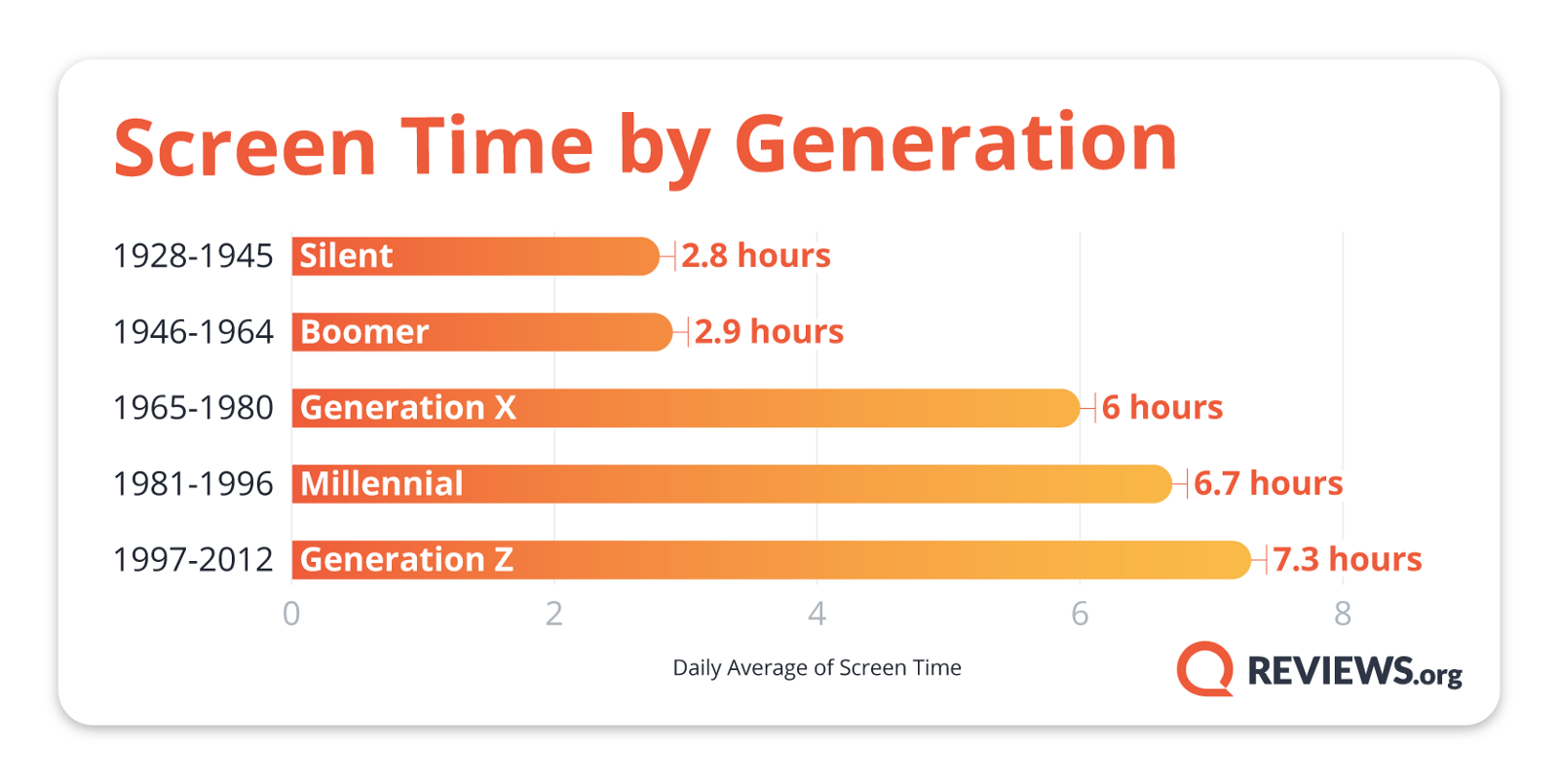
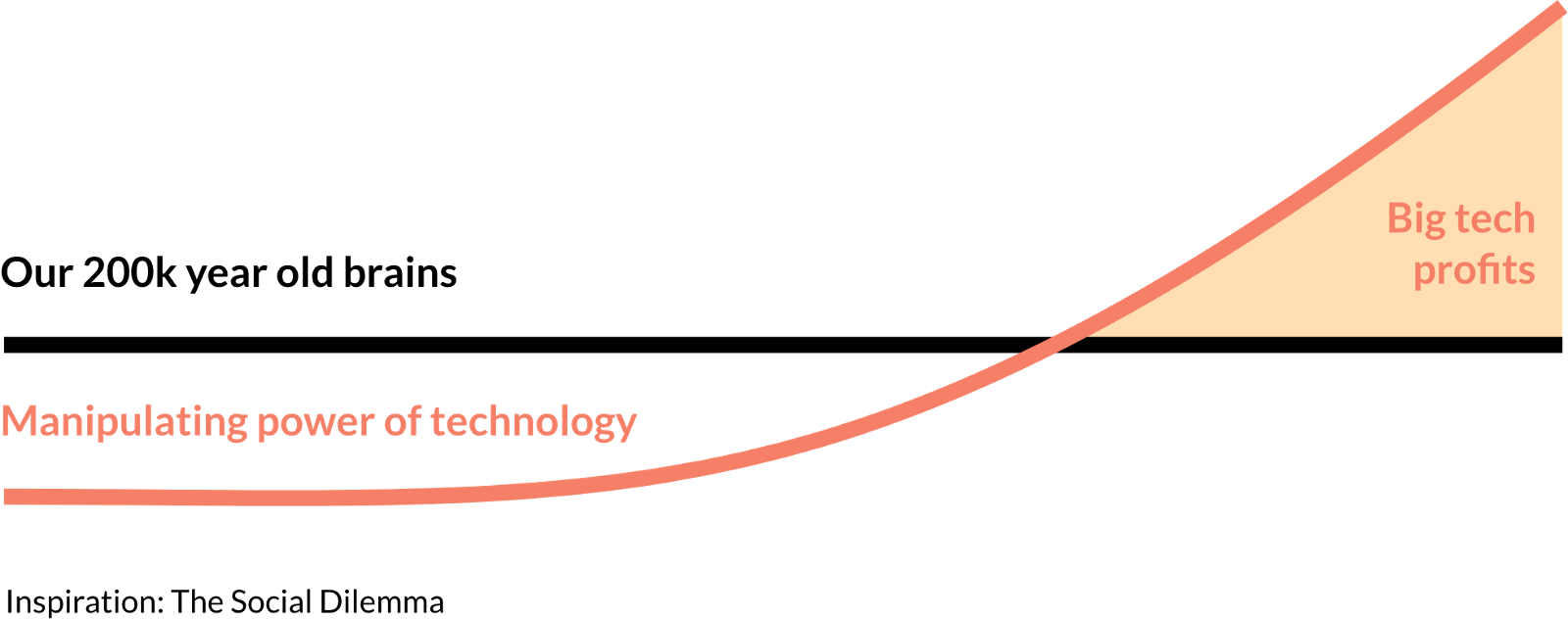
Social media is genuinely useful for staying connected with people we care about. The problem isn't social media itself — it's that these platforms are designed to keep us scrolling far longer than we intended. They're not inherently bad, but they're nearly impossible to use in moderation the way they're currently built.
4. Apps are designed to keep you scrolling

These patterns affect most of us, whether we realize it or not. The challenge is that many of us have grown up with smartphones as a constant presence — they're woven into how we stay connected and informed. The issue isn't the technology itself, but that it's designed to capture more of our attention than we'd choose to give it if we were more aware of what was happening.
Why it's hard to notice in the moment
The tricky part is that mindless scrolling doesn't feel harmful while it's happening. You pick up your phone to check one thing, and suddenly 20 minutes have passed. It's only afterward — when you feel drained, behind on what you meant to do, or just vaguely off — that you realize what happened. By then, the time is gone and you're left feeling frustrated with yourself.
This is why traditional screen time reports that show you your usage after the fact often just make you feel worse without actually helping you change the pattern.
What you can actually do about it
The good news? You don't need to delete your apps or go on a digital detox to feel better. What makes the biggest difference is simply being more aware of your patterns — especially while you're scrolling, not just after.
When you can see your screen time before opening an app and while you're using it, you naturally make different choices. You stay in control without needing willpower or guilt. It's about using social media with intention — checking in when you want to, staying in the loop, then moving on with your day.
Want to start scrolling with more intention? Check out our practical strategies to help you stay in control of your screen time without the guilt or restriction.
 Try Unscroll